You lead customer success or support. Tickets are climbing, headcount isn't, and you can see exactly where NRR dies: onboarding. Customers who don't get set up in the first 30 days never reach value, and they churn. Meanwhile the CEO wants AI in the product this quarter.
Sierra and Decagon are the names everyone mentions. They're good at what they do. Look closely at what that is.
Deflect vs. do
Sierra and Decagon are deflection engines: they resolve a ticket by answering it — surfacing the right doc, explaining the right steps. That genuinely helps. But a huge share of your queue isn't questions. It's tasks: "set up my integration," "configure this alert," "finish onboarding my team." An agent that answers can only tell the user what to do next. It cannot do it.
Rover acts. It runs the setup with the user, completes the workflow, and resolves the ticket by performing the task — not by linking a help article. Activation rises because customers actually get configured. Tickets fall because the thing is done, not explained.
| Sierra / Decagon | Rover | |
|---|---|---|
| Resolves by | Answering | Doing the task in your real UI |
| Where it lives | Support surfaces | Your product AND your marketing site |
| Typical annual cost | ~$150K–$500K+ (Decagon's median contract is ~$386K) | A fraction |
| First-year setup | Months, plus $50–200K implementation | A script tag; live the same day |
| Pricing model | Per-resolution / platform fee | Success-gated pilot, then priced to the surface |
The reliability question, answered with published numbers
An agent that acts in your product has a higher bar to clear than one that answers. So we publish our results:
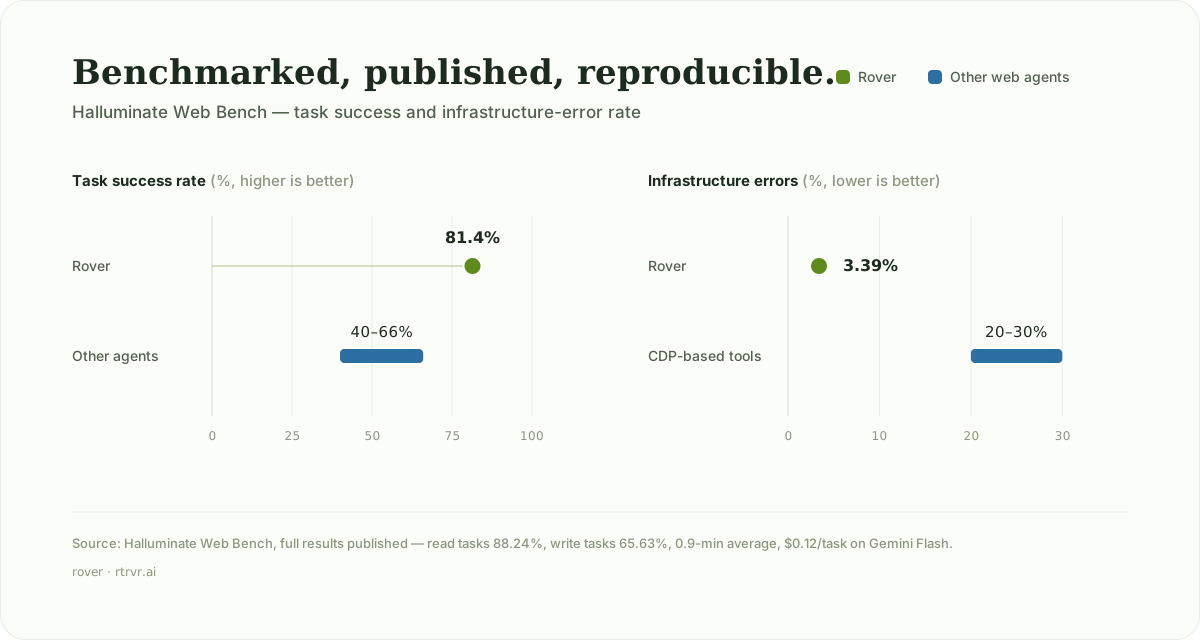
And we report the live number alongside the lab number: on our own site, Rover completed 77% of 121 real multi-step tasks end-to-end, averaging under two minutes each — with humans handed the wheel whenever confidence drops. The full first-party data is here.
Frequently asked questions
Does Rover deflect tickets the way Sierra and Decagon do?
Yes — and then it goes one step further. Informational tickets get answered; task-shaped tickets get done. In most support queues the task-shaped tickets are the expensive ones, because today they escalate to humans.
What about hallucinations and safety inside our product?
Rover is scoped to the flows you enable, with confidence-gated human handoff, audit trails, and hard rails around payments — cards never touch the AI. You judge the pilot on one metric you chose, so trust is earned with your own data, not our claims.
We're also being pitched "build it in-house."
Read the build-vs-buy math first: ~$1.3–3M a year and ~12 months for a team that can do this — before the maintenance treadmill starts.
The wedge is one flow — your most expensive ticket type or your onboarding cliff — one metric, and a success-gated pilot. Talk to us →