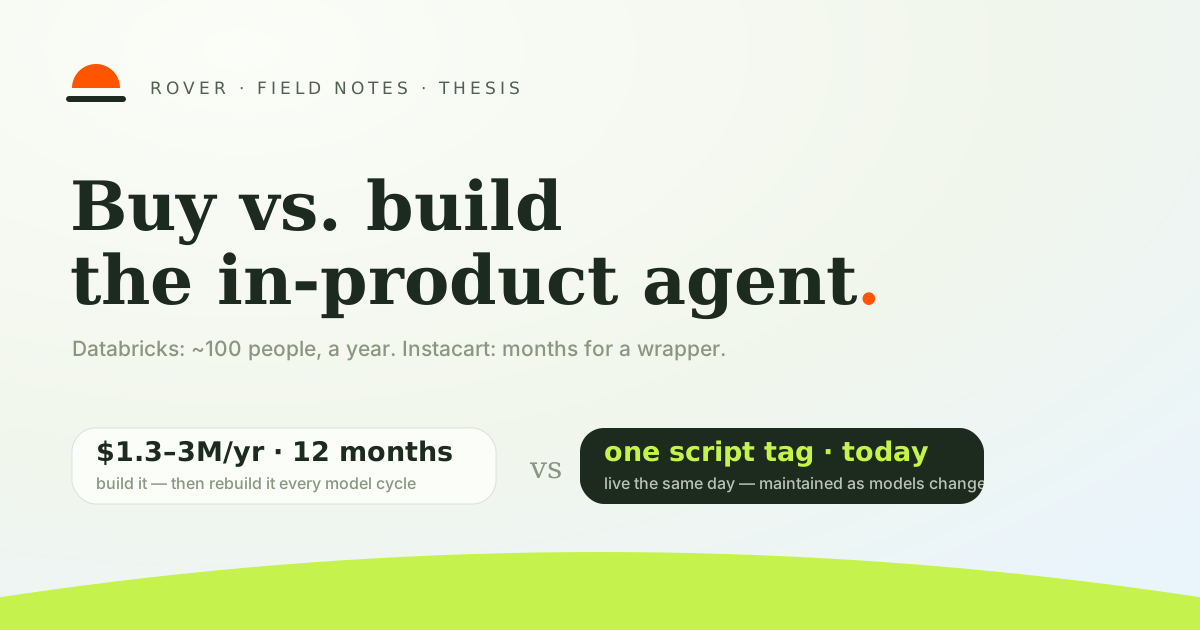
Every SaaS roadmap now has the same line item: "an AI agent that can operate the product." Most companies should not build it. Here's the math, with the cases where building does win.
What building actually costs
An agent that reliably operates a real web app is a hard, full-time system — not a wrapper around an LLM API. The evidence is public:
- Databricks put roughly 100 people on their internal agent for about a year.
- Instacart spent months and a dedicated team to ship a ChatGPT app.
- A Forward-Deployed or Applied-AI engineer runs ~$300–400K/yr fully loaded; a minimum viable team of four is ~$1.3–1.5M in year one — before it ships.
Then the part nobody budgets: the models change every quarter, and your agent gets rebuilt against them. Forever. It's not a project; it's a treadmill.
The rule that settles it
Build the agent that is your moat. Rent the one that operates your UI. Driving your own interface is plumbing — undifferentiated, high-maintenance, and exactly the layer that rots as models churn. Your customers don't buy you because your copilot can click your buttons.
| Build in-house | Rover | |
|---|---|---|
| Time to live | ~12 months | Same day — one script tag |
| Year-one cost | $1.3M–$3M+ | A fraction; pilots a VP can approve |
| Model churn | Your team, every quarter | Ours — it's the whole job |
| Reliability | Unknown until built | Published: #1 on Web Bench |
| Your engineers | Consumed by plumbing | Building your actual moat |
The reliability you'd be renting
This is the part in-house teams spend the year discovering is hard:
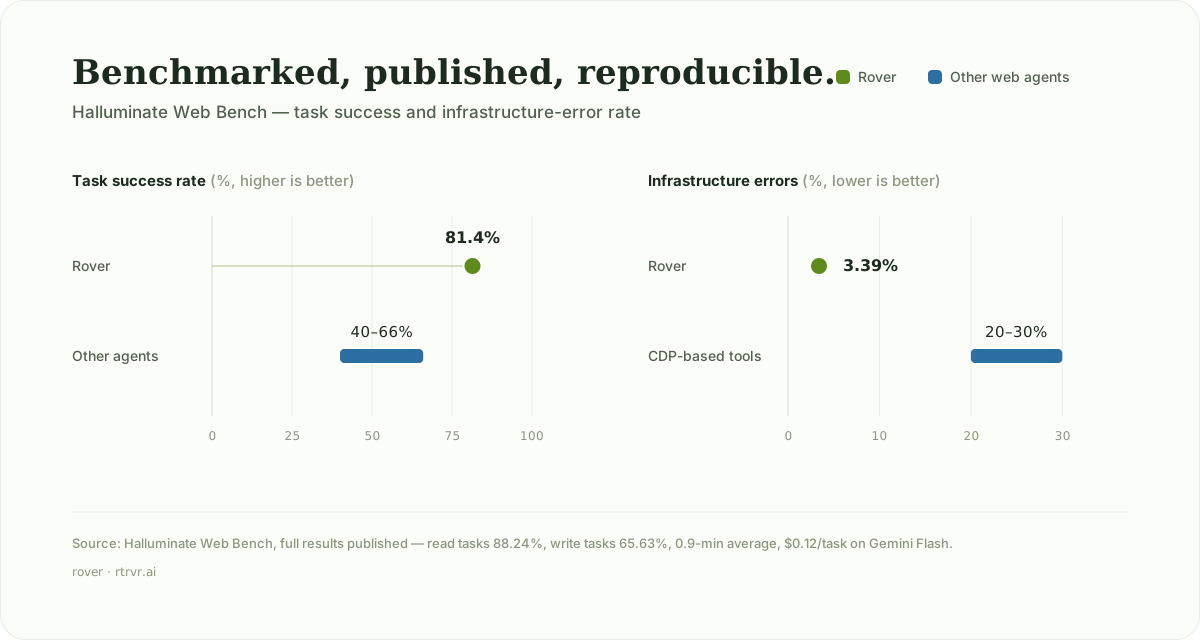
81.4% — state of the art, ahead of OpenAI's and Anthropic's agents — at $0.12 a task on Gemini Flash. That's what a specialist gets you on day one, and keeps current as the models change under everyone's feet.
When building is the right call
Honesty cuts both ways. Build in-house when the agent is the product (you're an agent company), when your workflows can't leave your walls even under a private deployment, or when you already run a staffed applied-AI platform team with room on its roadmap. Otherwise the year and the $1.3M+ buy you a worse version of something you could have turned on the same day.
Frequently asked questions
How long does an in-house product agent really take?
Plan on ~12 months to something trustworthy in production — Databricks-scale teams took about that with far more resources than most. The demo takes a weekend; the reliability takes the year.
What does the team cost?
$300–400K per fully-loaded applied-AI engineer; $1.3–1.5M/yr for a minimum four-person team; $2.5–3.2M for eight. Recruiting them is its own project — these are the scarcest engineers in the market.
What would we buy instead?
An agent that already operates real products at published, state-of-the-art reliability — live the same day, judged on one metric you choose. It also covers your marketing site: see Rover vs. Navattic + Drift. And your future agent traffic: see the agentic web, measured.
Spend your engineers where they compound. See Rover on your product →