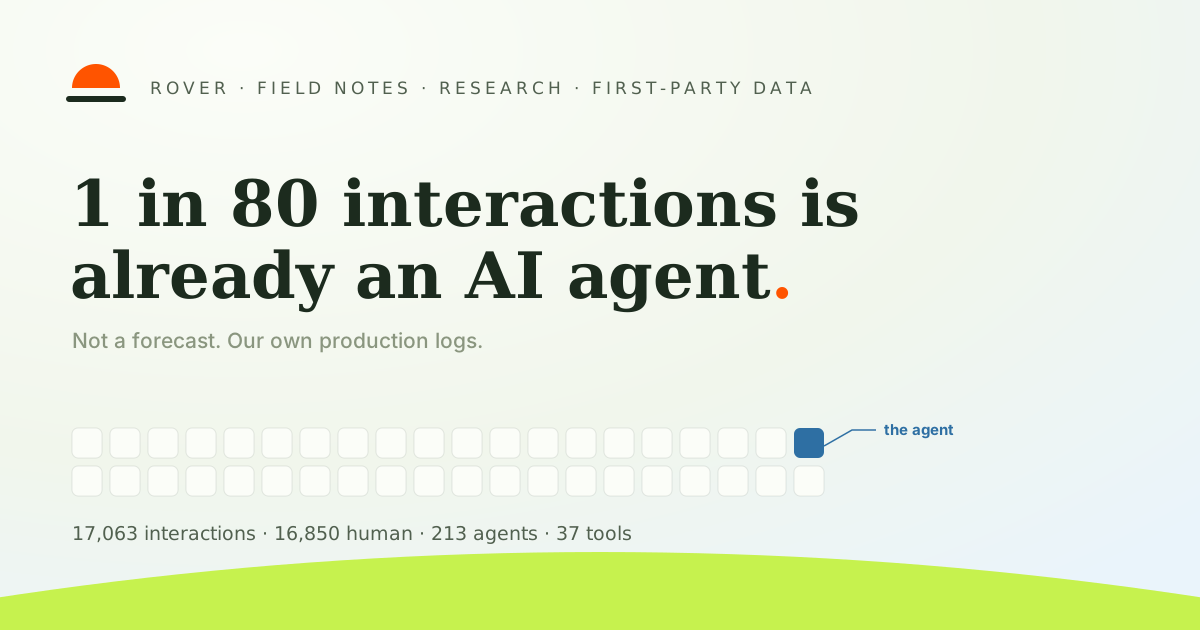
Everyone has a slide predicting AI agents will become major users of the web. We don't have a slide. We have logs. We put Rover on our own site, rtrvr.ai, and counted — including the parts that aren't flattering.
Your site has two kinds of visitors. We measured ours.
One embedded agent handled 17,063 interactions. Here's who was on the other end:
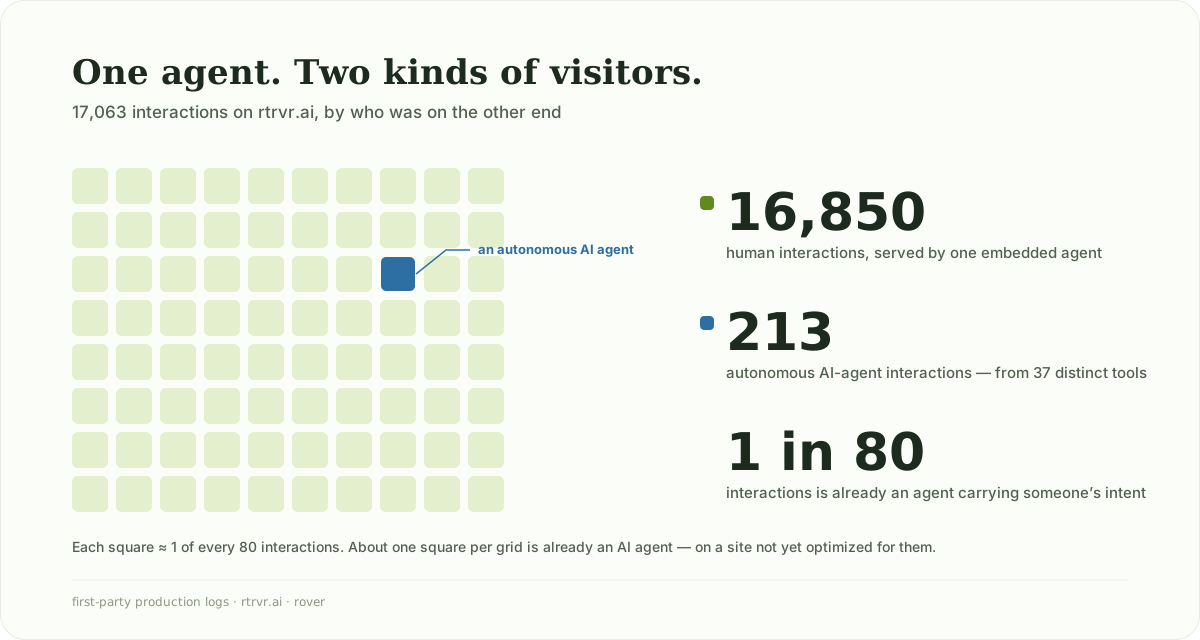
213 interactions came from autonomous AI agents — 37 distinct tools — arriving with someone's intent to get something done. That's ~1 in 80, on a B2B site that isn't even optimized for agents. On commerce, payments, or API sites the share is higher — and it's revenue arriving through a door nobody built.
What Rover actually did
Not just chat — work:
- 121 real multi-step tasks run end-to-end, 77% completed — averaging 5.8 steps and under two minutes each, no human in the loop.
- 573 prompts across 94 task runs — visitors and agents hand Rover jobs, not just questions.
- 92% of everything flowed through the embedded widget — one front door for humans and agents, measured.
The honest parts
We report the live number and the lab number. Live task success was 77% on a 121-task sample; our published Halluminate Web Bench score is 81.4%, state of the art. And our own conversion count? Zero — because we never wired a conversion action on our own site. It's the first thing we configure for a customer, and exactly why step one of every Rover pilot is: pick the one number this has to move.
What this means for your site
- If 1 in 80 of our interactions is already an agent, your site needs a front door that serves agents — discovery, auth, execution — not just humans. That's what our agent endpoint speaks.
- 77% of multi-step tasks finishing with nobody in the loop is what "onboarding completed" and "ticket resolved by doing" look like in practice — the same capability compared against support agents in Rover vs. Sierra & Decagon.
- One script tag produced all of this data. The alternative is a year and a hundred engineers.
Frequently asked questions
How do you know a visitor is an AI agent?
Rover classifies actors by how they arrive and behave — declared agent protocols and signed requests at the strongest tier, down to behavioral heuristics — and records the attribution (tool, vendor, trust tier) per interaction. The 213 figure counts only confirmed autonomous-agent channels, not "likely bot" traffic.
What do AI agents actually do on a website?
They arrive with a task: check a capability, extract an answer, complete a flow, book or buy on a user's behalf. Served well, they convert like intent-rich visitors — because that's what they are.
How do I make my site agent-ready?
Expose discovery (well-known endpoints), authenticate and meter agent traffic, and give agents a way to complete tasks — with human handoff for payments. Rover ships all of it in the same script tag that serves your human visitors. The manifesto has the full argument.
The agentic web isn't a forecast. It's in the logs. Put a front door on your site →